Django Project Structure with a Focus on System Design
Django has long been a framework for quickly building functional applications. A few models, some views, a bit of template code, and a project was up and running. This way of thinking is now only partly valid.

Bernd Fischer
26. Mar 2026 · 5 min read

Introduction: From Developer to System Designer
Thanks to tools, automation, and especially AI, pure "writing code" has become significantly easier. The real bottleneck has shifted. Implementation is no longer the problem; it's the system structure. Developers today need to understand how applications are composed, how they evolve, and how they remain stable in the long term.
Why "simple development" is no longer enough today
Many projects start quickly and straightforwardly. Features are implemented directly, decisions made pragmatically. This works well at the beginning but leads to issues as the project grows.
The application expands, requirements change, and suddenly questions arise such as:
- Where does this logic actually belong?
- Why is this part so slow?
- What happens if we change something here?
Without clear system design, dependencies emerge that can no longer be controlled. This is exactly where it becomes clear that development is more than just writing code.
What system design means in the Django context
System design means consciously deciding how an application is structured. It is not only about something working but about it being:
- maintainable
- scalable
- reliable
In the Django context, this especially concerns how the individual parts interact: database, business logic, HTTP layer, and external systems.
A simple model looks like this:
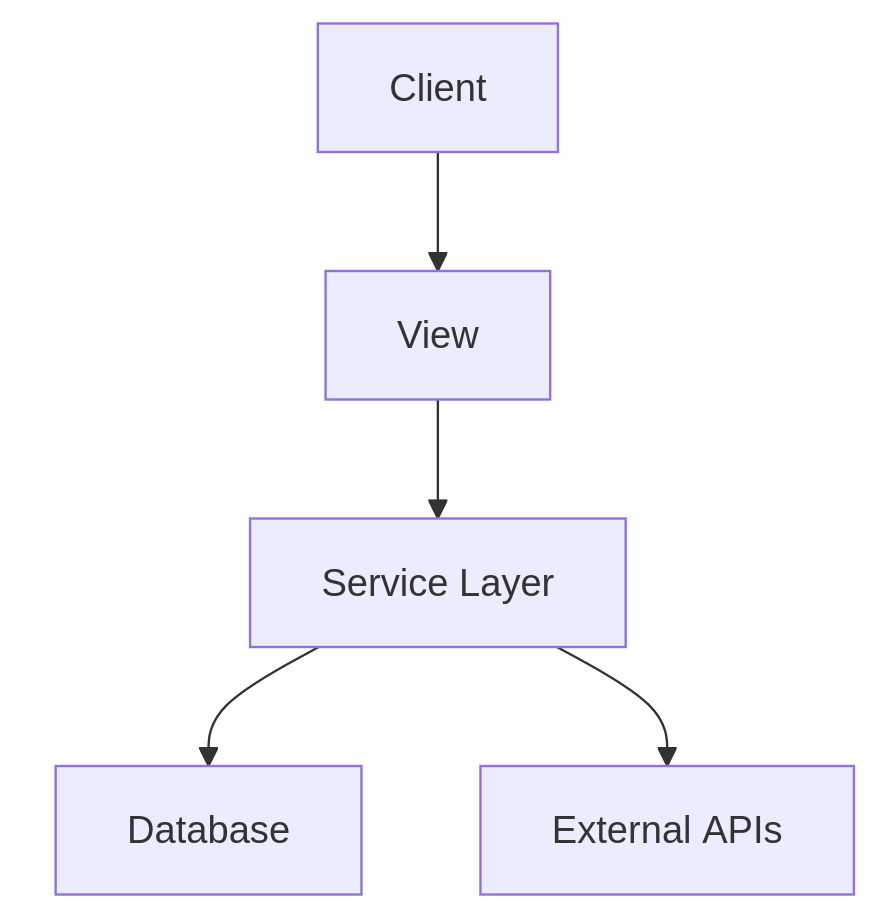
This diagram illustrates a central idea: the view is not the place for logic, but merely an entry point. The real work happens in the system core.
Typical problems in classic Django projects
Many Django projects evolve organically. At first, the structure is clear, but over time responsibilities become blurred.
Typical symptoms are:
- Logic in views
- Overloaded models
- Unclear data flows
- Hard-to-follow dependencies
This leads to changes becoming risky. Developers no longer know exactly which parts are affected and avoid adjustments for fear of side effects.
Basic principles of a good project structure
A good structure does not arise by chance. It is based on clear principles.
The most important principle is the separation of concerns. Each part of the system should have a clearly defined task. This makes the code more understandable and changes more predictable.
Another principle is explicitness. Processes should be visible and traceable. Implicit magic may be convenient short-term but complicates maintenance in the long run.
Architecture and layers in Django
A proven model is layered architecture. The application is divided into clearly separated areas.
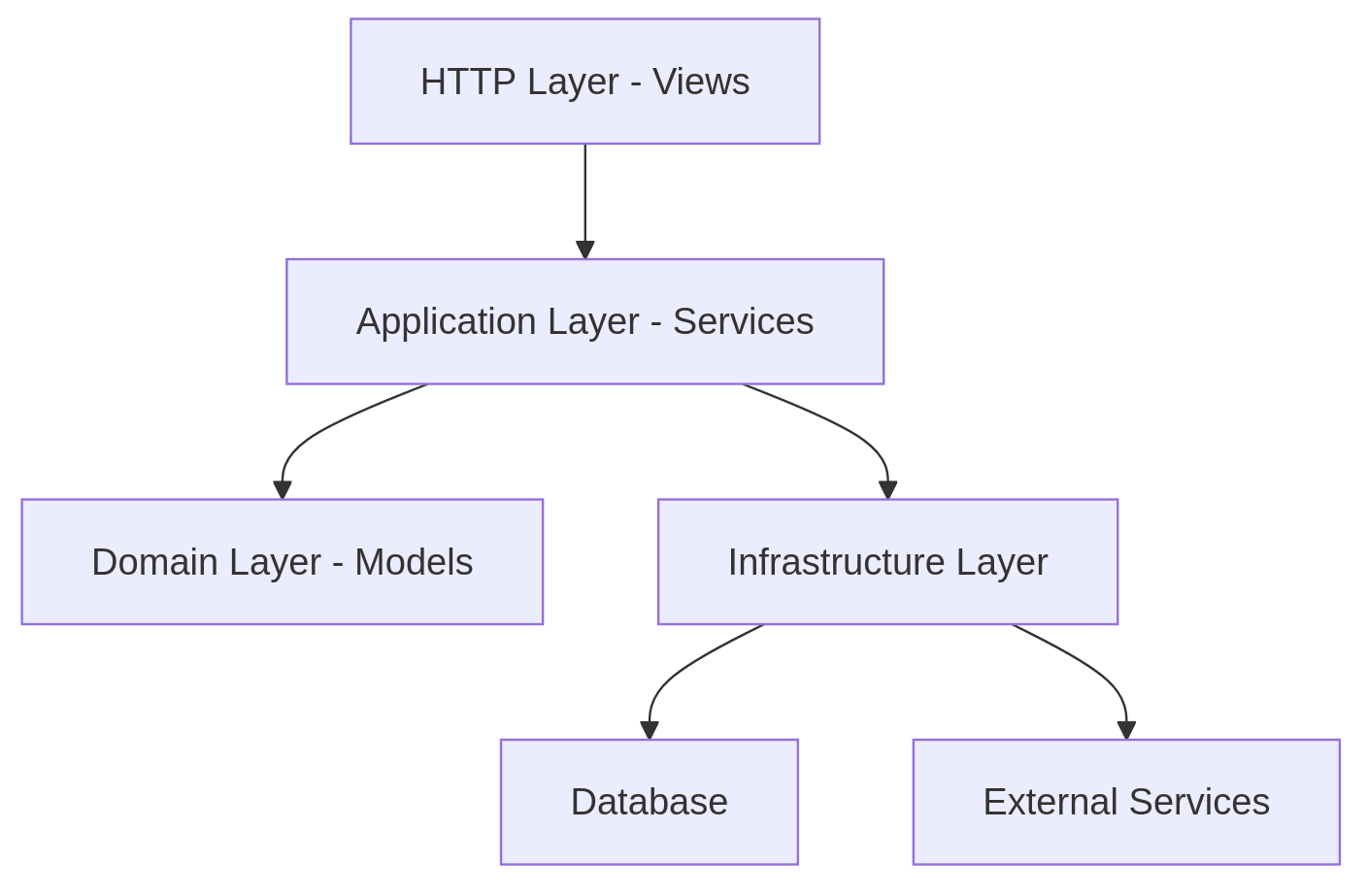
Views accept requests and delegate to services. Services contain the business logic and work with models and infrastructure components.
This structure ensures that logic is not randomly scattered but located centrally.
Database and data flow as system components
The database is not a detail but a central part of the system. Many performance and maintainability problems arise from inefficient queries or unclear data flows.
Important questions are:
- Which data is loaded when?
- How many queries are generated?
- Where is data transformed?
Good system design takes these aspects into account from the start. Queries do not belong randomly in code but are consciously designed.
Scaling and reliability
Scaling does not just mean more servers. It means the system remains stable under load.
Several factors play a role here:
- clear separation of components
- controlled data access
- clean interfaces
Reliability is closely connected. A system must remain stable even in the event of errors. Mechanisms include:
- timeouts
- retries
- idempotent operations
These aspects cannot be "added later" but must be part of the design.
Workflow in the system
A typical workflow in a well-structured Django system looks like this:
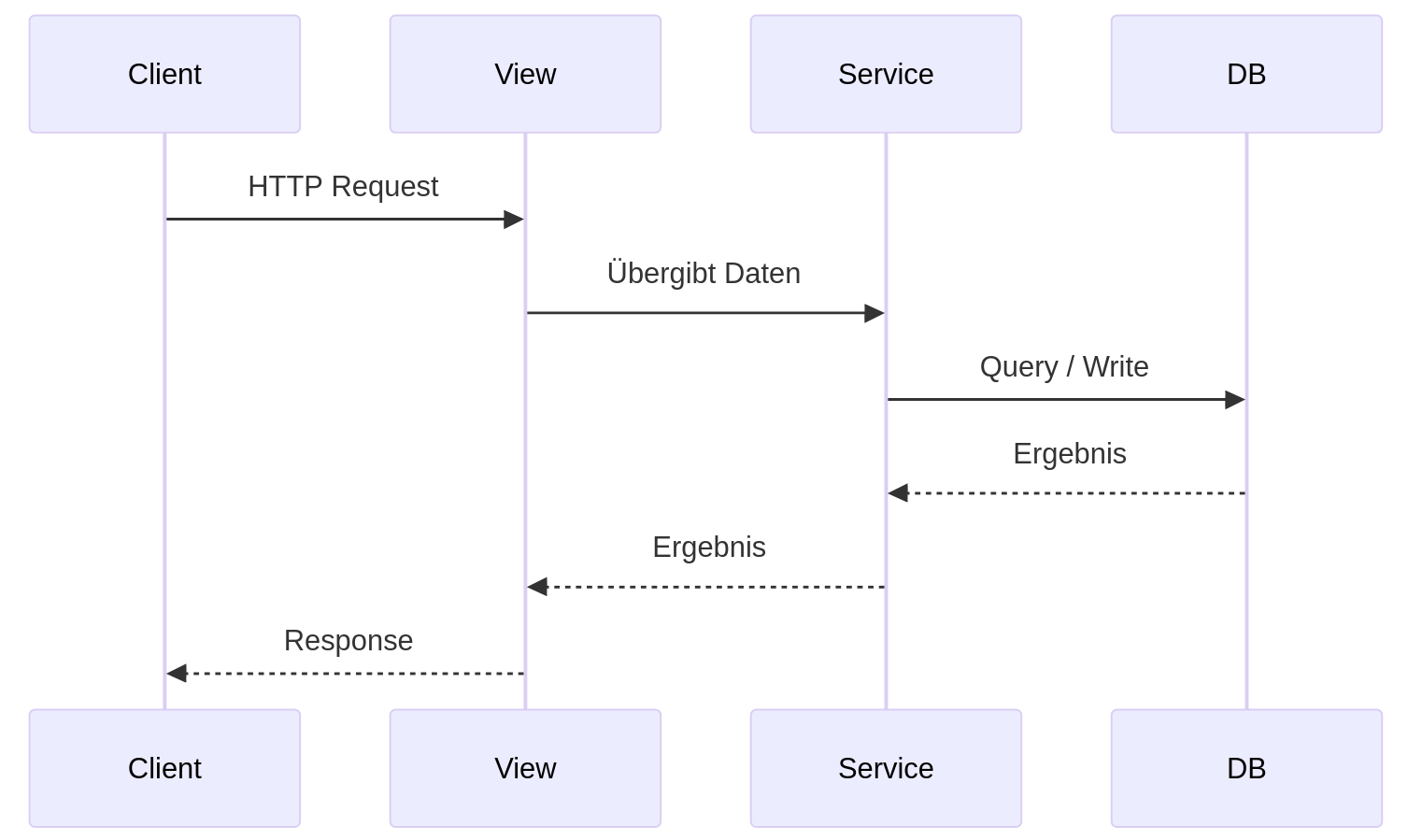
This simple pattern shows that each layer has a clearly defined role. The view controls, the service decides, the database stores.
Considering deployment and operations
An often underestimated aspect is operations. Many projects are developed without considering how they will run later.
Questions that should be asked early:
- How will deployment be handled?
- How is error monitoring done?
- How is scaling managed?
Tools like Docker, CI/CD, and monitoring are not extras but part of the system. Those who consider them early avoid major overhauls later.
The developer's new role
The developer's role is changing. It is no longer just about implementing features but designing systems.
This means:
- making decisions instead of just implementing
- understanding contexts instead of solving isolated problems
- thinking long-term instead of optimizing short-term
AI can assist in writing code. However, it cannot make architectural decisions. This is exactly where the developer's responsibility lies.
Typical mistakes
A common mistake is focusing too much on code. Optimizing, refactoring, and debating while ignoring the fundamental structure.
Another mistake is the lack of clear boundaries. When everything interacts with everything else, a system becomes hard to control.
Conclusion
Django is a powerful framework but imposes no architecture. The structure of a project arises through developers' decisions.
Anyone working with Django today must go beyond pure implementation. Maintainability, scalability, and reliability are not optional topics but central requirements.
A good system does not arise by chance but through deliberate design.
More on clean separation of logic is available in the article: Services in Django